Before Money: Barter and Early Exchange
The earliest forms of commerce did not depend on standardized currency. People exchanged resources, labor, food, tools, livestock, and other useful goods according to local needs and social customs. These systems varied considerably between communities and were often more complex than the simple idea of one person directly swapping one item for another.
How Barter Worked in Early Communities
Barter describes the direct exchange of goods or services without using money as an intermediary. A farmer might exchange grain for tools, while a craftsperson could provide labor in return for food or materials. In practice, however, early economic life also relied heavily on relationships, obligations, gifts, credit, and informal agreements. Exchange was often embedded within family networks and communities rather than conducted as a purely commercial transaction between strangers.
Commodity Money and Objects of Value
Before metal coins became widespread, many societies used valuable or practical goods as forms of payment. Depending on the region and period, these could include livestock, grain, shells, salt, cloth, metal, beads, or other scarce resources. Their usefulness depended largely on whether people within a community recognized and trusted their value.
Commodity money solved some problems associated with direct barter, but it introduced others. Food could spoil, animals were difficult to divide into precise units, and bulky goods were inconvenient to transport. More durable and standardized forms of value eventually became increasingly attractive, particularly as long-distance trade networks grew.
The Development of Coins and Organized Marketplaces
The emergence of coinage marked an important change in economic history because it made value easier to measure, transport, and recognize. Coins also helped governments and political authorities play a greater role in controlling currency, taxation, and commercial standards.
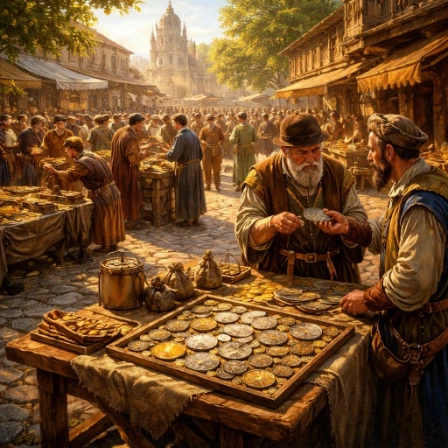
Markets developed alongside these monetary systems. Town squares, ports, fairs, and trading centers brought together producers, merchants, consumers, and travelers, creating spaces where goods and information could move between regions.
Why Coins Changed Everyday Trade
Some of the earliest widely recognized forms of minted coinage appeared in the ancient Mediterranean world during the first millennium BCE. Coins typically contained recognizable designs or marks associated with a ruler, city, or issuing authority. Their weight and metal content provided a relatively consistent way of expressing value.
For ordinary buyers and sellers, coins made smaller transactions easier. Goods could be priced using a shared unit rather than negotiated through complicated exchanges of commodities. At the same time, coinage helped governments collect taxes, pay soldiers, and support wider administrative systems. Counterfeiting, changing metal content, and differences between regional currencies remained persistent problems.
Marketplaces as Centers of Daily Life
Historical marketplaces were not simply places to purchase food or household goods. They were important social spaces where people exchanged news, established business relationships, arranged transportation, and encountered products from other regions.
As cities expanded, many markets became increasingly specialized. Certain areas might focus on livestock, textiles, spices, metalwork, or agricultural goods. Rules concerning weights, measurements, prices, market days, and acceptable commercial behavior were often introduced to reduce disputes. These early systems helped establish principles that remain recognizable in modern commerce, including standardized measurements and consumer protections.
From Metal Coins to Paper Money
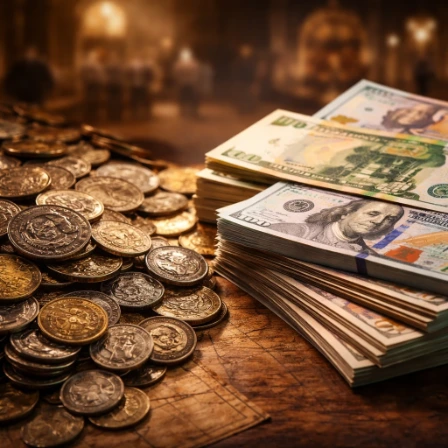
Coins remained central to commerce for centuries, but expanding economies created demand for payment methods that were easier to transport in large amounts. Paper instruments gradually became part of economic life, although their development differed significantly between regions.
The Rise of Paper Currency
China played an important role in the early history of paper money. Merchants initially used written documents representing deposits or obligations, while governments later issued official paper currencies. The concept eventually spread and developed in different forms elsewhere.
Paper money required a different type of confidence from metal currency. Instead of relying mainly on the material value of gold, silver, or another commodity, users increasingly depended on the credibility of the institution issuing the note. This connection between money and institutional trust remains fundamental to modern monetary systems.
Banks, Credit, and Commercial Expansion
Banking institutions provided merchants and households with additional ways to store, borrow, transfer, and manage money. Written instruments such as bills of exchange allowed traders to conduct business without carrying large amounts of physical currency over dangerous trade routes.
Credit also became increasingly important in everyday economic life. Shopkeepers could allow trusted customers to purchase goods and pay later, while merchants financed shipments using borrowed capital. Although financial technology has changed dramatically, the underlying concepts of borrowing, repayment, risk, and trust have been part of commerce for centuries.
Everyday Economics at Home
Economic history is not only the history of governments, banks, and major trading companies. Much of it concerns ordinary decisions made inside households. Families have always needed to balance available resources against food, housing, clothing, transportation, emergencies, and other expenses.
Household practices have changed alongside wages, currencies, banking systems, and consumer markets. Several familiar habits have deep historical roots:
- Recording income and expenses in household account books
- Saving coins or cash for future purchases
- Buying goods on credit from local merchants
- Comparing prices between sellers and markets
- Repairing or reusing possessions to reduce expenses
- Setting aside money for emergencies or seasonal costs
Currencies Around the World
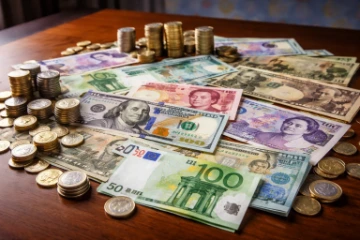
Currencies developed differently depending on political systems, trade relationships, natural resources, and historical circumstances. Some currencies remained strongly associated with individual states, while others circulated across large territories or became influential in international commerce.
National currencies allow governments and central monetary institutions to manage important parts of their economies. Currency systems can influence interest rates, inflation, borrowing conditions, and international trade. Their value relative to other currencies can change according to economic conditions, monetary policy, political events, and market expectations.
International trade creates the practical problem of converting one currency into another. Historically, merchants dealt with different coins, changing metal standards, and local systems of measurement. Modern foreign exchange markets perform a related function on a much larger scale.
How Payments Evolved in the Modern Era
The twentieth and twenty-first centuries transformed the way people interact with money. Cash remains important in many societies, but bank accounts, payment cards, online transfers, mobile apps, and digital wallets have created additional ways to complete everyday transactions.
Checks allowed individuals and businesses to authorize payments without exchanging physical cash. Credit and debit cards later made electronic authorization increasingly common at shops, restaurants, hotels, and other businesses.
Digital banking accelerated this shift. Many payments that once required cash, written documents, or visits to a bank can now be completed electronically. Salaries can be deposited automatically, household bills can be scheduled online, and purchases can be made across borders without either party handling physical currency.
What the History of Commerce Tells Us Today
From livestock and grain to coins, paper notes, payment cards, and digital wallets, the methods used to exchange value have continually adapted to changing societies. Each stage attempted to solve familiar problems: how to measure value, establish trust, transport wealth, keep records, settle debts, and make transactions easier.
The tools may change, but many principles remain remarkably consistent. Markets still depend on trust, households still manage limited resources, merchants still compare costs and risks, and currencies still require broad acceptance to function effectively. Looking at the history of money and trade therefore offers more than a record of old coins and marketplaces. It provides a clearer view of how everyday economic life developed and why modern commerce continues to evolve.